An English cottage garden captures romance, abundance, and timeless charm. Whether you're starting from scratch or refining an existing space, understanding the core principles of garden design helps you create a retreat that feels both curated and effortlessly natural.
vividoo makes it easy to visualize your garden transformation before you dig a single hole. Upload a photo of your outdoor space, select your preferred style, and watch AI redesign your garden with authentic details and seasonal beauty.
The Heart of English Cottage Gardening
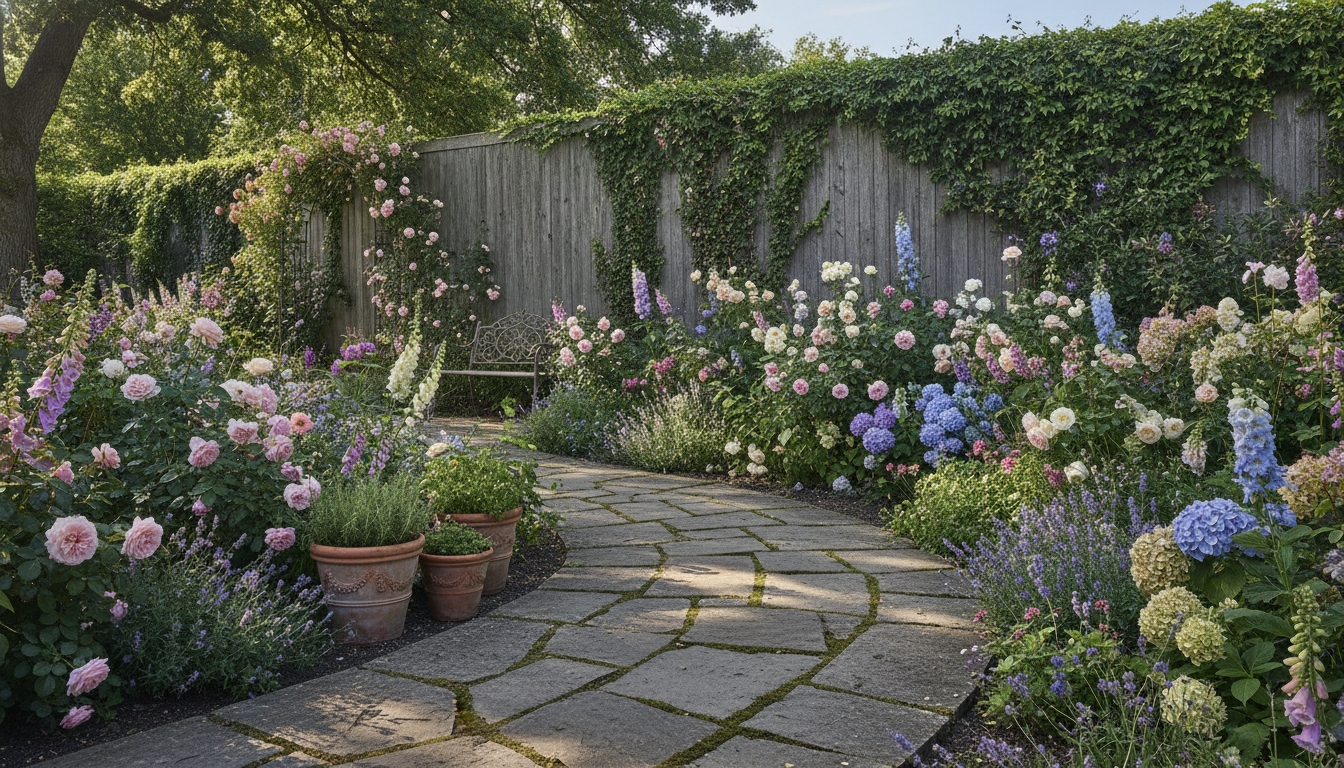
English cottage gardens prioritize layering, colour, and romantic abundance. Rather than following rigid geometric patterns, they embrace a "cultivated chaos" where shrubs, perennials, and climbing plants weave together in harmonious profusion.
The English style emphasizes heritage planting, soft colour palettes, and structural elements like arbours and trellises. The Cottage style takes this further, celebrating the quaint, densely planted aesthetic with a focus on heirloom varieties and informal pathways.
- Dense, layered planting with roses, delphiniums, and foxgloves
- Winding paths that invite exploration
- Mixed borders combining perennials, annuals, and self-seeding plants
- Climbing plants and trained vines on fences and structures
- Soft, muted colour schemes with pops of seasonal interest
Ground Materials for Authentic Character
Your choice of paving and ground surface shapes the garden's personality. Garden materials renovation options allow you to test different surfaces before committing.
Garden Concrete Pavers offer durability and a traditional appearance, perfect for meandering pathways through borders. Exterior Wood Decking brings warmth and a naturalistic feel to seating areas, aging gracefully over seasons.
For a more contemporary cottage aesthetic, blending both materials creates visual interest and defines different garden zones.
Vertical Interest and Climbing Plants
Wild Climbing Ivy creates dramatic backdrop texture and softens hard surfaces. Climbing roses, clematis, and honeysuckle transform fences into living tapestries of colour and fragrance.
Use timber structures like trellises, arbours, and obelisks to frame views and add height. The interplay of greenery and structure creates depth, drawing the eye through the garden and inviting visitors to discover new angles.
Material & style pairings
| Style | Recommended Materials | Why it works |
|---|---|---|
| English | Garden Concrete Pavers, Wild Climbing Ivy | Traditional pavers evoke heritage charm; climbing ivy adds soft texture and mature character to boundaries and focal points. |
| Cottage | Exterior Wood Decking, Wild Climbing Ivy | Warm wood decking creates cosy gathering spaces; ivy-covered structures amplify the romantic, densely planted aesthetic. |
| Tropical | Exterior Wood Decking, Outdoor Sun Shade Sail | Timber decking suits lush, moisture-rich planting; shade sails provide relief and define lounge areas in exuberant settings. |
| Desert | Garden Concrete Pavers, Pool Rubber Paint | Concrete suits dry climates and low-maintenance schemes; rubber paint defines functional zones with durability and minimal upkeep. |
Colour, Texture, and Seasonal Flow
Understanding colour theory helps you compose harmonious borders. Cottage gardens thrive on soft pastels—blush pinks, lavender, cream, and soft blue—layered with foliage textures in silver, grey, and deep green.
Plan for year-round interest by grouping spring bulbs, early shrubs, summer perennials, autumn berries, and winter structure. This succession of bloom ensures your garden never feels bare or monotonous across the seasons.
Visualizing Your Design Before You Plant
Rather than relying on guesswork, use AI room redesign for Garden / Yard to test colour schemes, material combinations, and planting density. Upload your current garden photo and explore how different styles and materials transform the space.
Need to experiment further? Remove existing features to reimagine the layout, or add garden furniture and ornaments to refine the composition. This risk-free exploration helps you commit confidently to your design plan.
Beyond the Cottage: Related English Garden Inspirations
If English cottage aesthetics captivate you, explore English Country Garden Design Ideas That Inspire for broader context. For structured approaches to implementation, read English Garden Design Plans That Transform Any Yard.
Dive deeper into hardscaping and planting combinations with English Garden Landscaping Ideas for Every Yard, and discover how to maximize outdoor impact with English Garden Design Ideas That Transform Your Outdoor Space.
FAQ
What makes a cottage garden different from a formal English garden?
Cottage gardens embrace informal, densely planted abundance and self-seeding charm, while formal English gardens emphasize symmetry, structure, and disciplined lines. Both share heritage roots but differ in aesthetic philosophy and maintenance approach.
Can I mix English and Cottage styles in one garden?
Absolutely. Many gardeners blend structured English elements (defined pathways, focal points) with the luxuriant, romantic planting of cottage style. Use materials like Garden Concrete Pavers to create order while allowing climbing ivy and mixed borders to soften edges.
What ground material works best for a wet climate?
Garden Concrete Pavers drain well and resist moss growth better than untreated surfaces. Exterior Wood Decking requires regular maintenance in wet climates but ages beautifully with proper treatment. Consider raised beds and improved drainage in conjunction with your material choice.
Start Your Garden Transformation Today
English cottage garden design doesn't require years of experience or months of planning uncertainty. With vividoo, you can visualize multiple styles, test material combinations, and refine your vision before making permanent changes. Try it free on vividoo.app—upload your garden photo, choose your preferred style, and discover how English, Cottage, Tropical, or Desert aesthetics transform your outdoor space into the retreat you've always imagined.