Your dining room is more than a place to eat; it's where connections deepen and moments matter. A zen-inspired dining space cultivates mindfulness, simplicity, and harmony—inviting you and your guests to slow down and truly nourish both body and soul.
Whether you're starting from scratch or refining an existing room, zen dining design principles paired with the right contemporary styles and materials can completely transform how you experience meals together.
What Makes a Zen Dining Room
Zen philosophy emphasizes balance, simplicity, and natural elements, creating spaces that feel intentional rather than cluttered. A zen dining room strips away unnecessary distractions and focuses on quality, craftsmanship, and the beauty of restraint.
Key principles include:
- Minimal color palettes with natural, earthy tones
- Natural materials and authentic textures
- Uncluttered surfaces and open space
- Soft, indirect lighting that promotes calm
- Connection to nature through plants or natural elements
- Intentional furniture placement that encourages conversation
The goal is a space where diners feel present and peaceful, free from visual noise and stress.
Zen Style for Dining Rooms
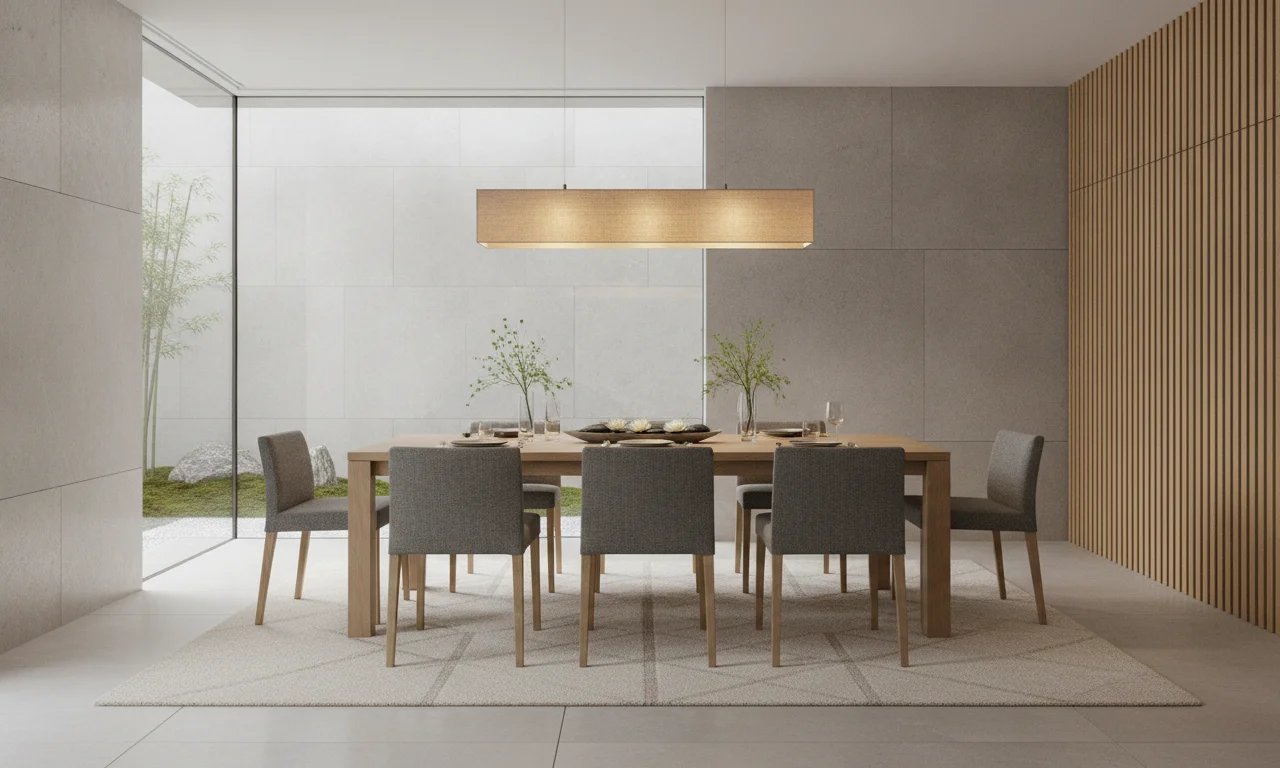
The Zen style in dining room design directly embodies these principles. Clean lines, low-profile furniture, natural wood finishes, and muted palettes create an inherently calming atmosphere.
Zen dining rooms often feature simple wooden tables, minimal centerpieces, and plenty of breathing room. The dining room serves as a gathering place, and zen design ensures that gathering happens without sensory overload. Use AI room redesign to explore how zen styling transforms your current space into a sanctuary for mindful dining.
Complementary Contemporary Styles
While Zen stands on its own, pairing it with other refined styles deepens the design impact. Midcentury modern design shares zen's appreciation for clean functionality and natural materials, creating a sophisticated fusion of minimalism and warmth. Deconstructivism introduces subtle geometric complexity while maintaining zen's emphasis on space and form. Nouveau brings organic, flowing elements that echo nature's presence in zen spaces.
Each style can be reimagined for your dining room to find the perfect balance between your personal aesthetic and peaceful design principles.
Material & style pairings
| Style | Recommended Materials | Why It Works |
|---|---|---|
| Zen | Board-Formed Concrete, Wool Rug | Concrete's raw, honest surface complements zen minimalism; wool provides warmth and natural texture underfoot |
| Midcentury | Anodized Aluminum, Pastel Terrazzo | Metal accents echo mid-century manufacturing heritage; terrazzo's playful yet refined palette suits the era's optimism |
| Deconstructivism | Board-Formed Concrete, Custom Pattern Mosaic | Textured concrete walls provide structural drama; mosaic patterns create visual interest without chaos |
| Nouveau | Anodized Aluminum, Pastel Terrazzo | Flowing aluminum curves align with art nouveau's organic forms; soft terrazzo colors enhance elegance |
Using Materials to Enhance Zen Dining Spaces
Renovating your dining room's floors and walls with the right materials grounds your zen vision. Board-Formed Concrete walls create a meditative, gallery-like backdrop that calms rather than overwhelms. Its raw texture speaks to authenticity and timelessness—core zen values.

A Wool Rug in neutral tones defines the dining area with warmth and softness. Natural wool fibers add organic comfort while maintaining visual simplicity. Underfoot texture grounds the space emotionally, inviting bare feet or socks—a small but meaningful gesture toward comfort and presence.

For a subtly playful zen approach, Pastel Terrazzo floors introduce soft color and gentle movement without visual clutter. Each aggregate stone catches light differently, creating depth that feels alive yet harmonious.
Styling Your Zen Dining Room
Beyond materials and style selection, refine your space with strategic furniture additions and replacements. Choose a simple wooden table as your focal point—solid, grounded, honest. Pair it with minimalist chairs that prioritize comfort without excessive ornamentation.
Lighting matters profoundly in zen spaces. Soft, diffused light from pendant fixtures or paper lanterns encourages relaxation. Avoid harsh overhead fixtures that create visual tension.
Consider virtual decluttering to remove visual distractions from your current dining room, or use object removal tools to test how the space feels with minimal decoration. Sometimes less is truly more.
Creating Flow and Connection
Zen dining rooms invite lingering—extended conversations, unhurried meals, genuine connection. Arrange furniture to facilitate face-to-face interaction without barriers. Leave wall space bare except for a single meaningful piece of art or a living plant.
Sound matters too. Hard surfaces like concrete can be balanced with soft textiles that absorb noise, keeping the acoustic environment calm and conducive to thoughtful conversation.
FAQ
Can I achieve a zen dining room on a budget?
Absolutely. Zen principles prioritize simplicity over expense. Focus on one or two quality pieces—a beautiful table, a natural rug—and leave ample open space. Paint existing walls in soft, neutral colors and add greenery. Zen design often costs less because it requires fewer furnishings and decorations.
What colors work best for zen dining rooms?
Soft, natural tones: whites, creams, warm grays, soft taupes, pale greens, and muted blues. These colors evoke nature and calm the nervous system. Avoid bold primaries or busy patterns; opt instead for single-color walls and naturally textured materials.
How do I combine zen with modern design?
Midcentury and Deconstructivism styles share zen's love of function and form. Use clean lines, honest materials, and uncluttered layouts from both philosophies. Technology like AI room redesign helps visualize these blends before committing.
Transform Your Dining Room Today
A zen dining room isn't about rigid rules—it's about intentional choices that reflect your values and support meaningful gatherings. Whether you're drawn to the pure simplicity of Zen, the warmth of Midcentury, or the sophisticated geometry of Deconstructivism, quality materials and thoughtful design create spaces where people truly connect.
Explore more dining room inspiration with tropical dining room designs and modern design styles, or discover budget-friendly decorating ideas to suit every approach.
Ready to reimagine your space? Try it free on vividoo.app—upload a photo of your dining room, select your preferred style and materials, and instantly visualize your zen dining sanctuary.