Your living room should be a refuge from the chaos of daily life. Zen living room design offers a proven approach to creating spaces that calm the mind, ground the body, and encourage genuine relaxation through balance, simplicity, and intentional material selection.
Unlike trends that come and go, zen principles endure because they address a fundamental human need: the desire for peaceful, uncluttered environments. This guide explores how to achieve authentic zen aesthetics in your living room, from choosing the right style framework to selecting materials that reinforce tranquility.
What Defines Zen Living Room Design
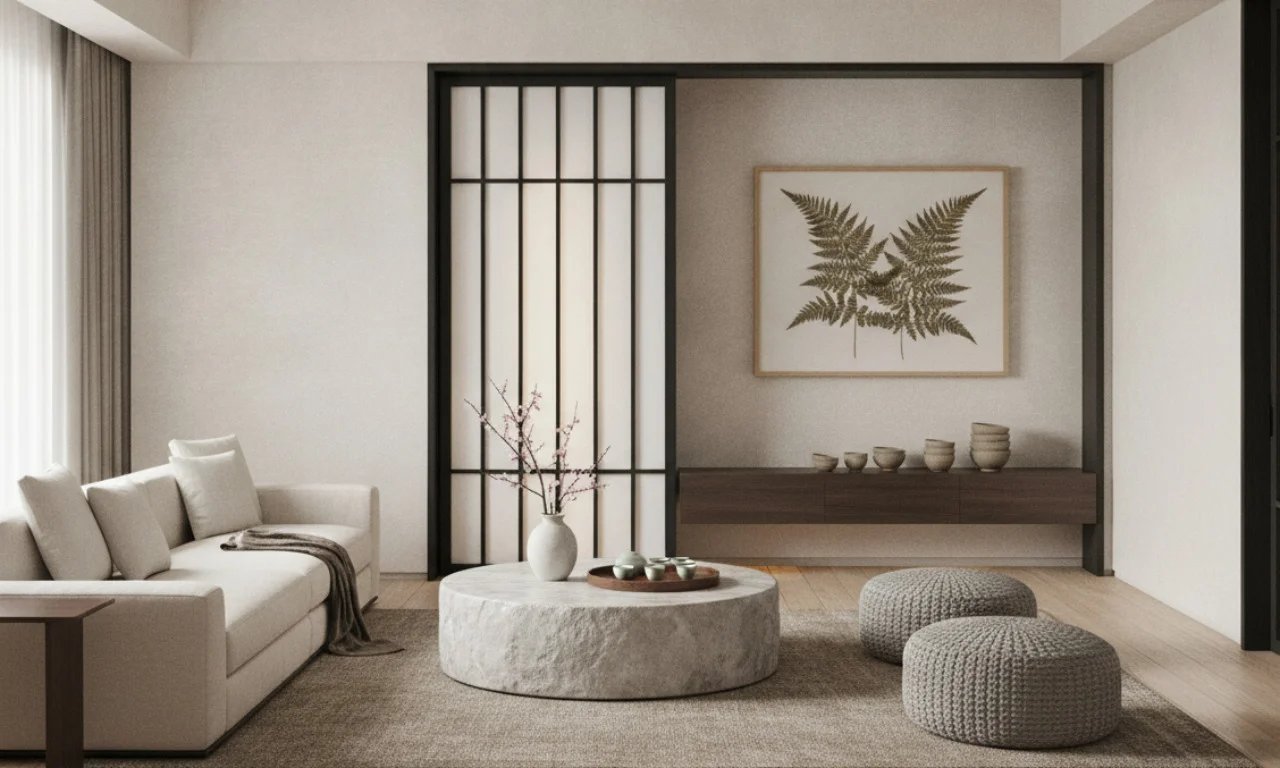
Zen design draws from Japanese philosophy, emphasizing emptiness, natural materials, and asymmetrical balance. The goal is not to create a sterile space, but rather to remove visual noise and let each element—furniture, color, texture—serve a clear purpose.
Key principles include limited color palettes, natural light, low furniture arrangements, and materials that connect you to nature. When you apply these principles thoughtfully, your living room becomes a space for contemplation rather than distraction.
Zen Style: The Foundation
The Zen style in vividoo embodies these principles directly. It emphasizes open floor plans, natural materials, soft tones, and minimal ornamentation. This style works best when paired with materials that feel organic and grounding.
If you're starting from scratch or want to see how zen principles apply to your existing space, use AI room redesign for Living Room to explore the aesthetic in context. You can also virtually declutter your living room to remove visual distractions before committing to permanent changes.
Exploring Complementary Styles
While Zen is the primary choice for calm spaces, other styles can incorporate zen principles. Bauhaus, for instance, shares zen's emphasis on form following function and the elimination of unnecessary ornament. Its clean lines and rational approach create a different but equally contemplative aesthetic.
Southwestern and Steampunk styles are more expressive, but elements of zen can be introduced through careful material choices and spatial planning. The key is intentionality: every piece should contribute to the overall sense of calm.
Material & Style Pairings
| Style | Recommended Materials | Why It Works |
|---|---|---|
| Zen | Thermal Wood (walls), High-Pile Charcoal (floor) | Warm wood tones and soft textiles ground the space in natural warmth while maintaining visual calm. |
| Bauhaus | Black Marble (floor), Oatmeal Neutral (walls) | Strong geometric contrast with restrained color palette reinforces rational design principles. |
| Southwestern | Micro Terrazzo (floor), Thermal Wood (accents) | Terrazzo's earthy speckles and wood's organic character honor regional authenticity. |
| Steampunk | Black Marble (floor), Oatmeal Neutral (walls) | Dark, solid flooring anchors industrial elements while neutral walls prevent visual overwhelm. |
Selecting Flooring for Zen Spaces
Flooring anchors your zen living room both physically and psychologically. Tiles like Micro Terrazzo offer durability and subtle visual interest without pattern overload. For warmth and texture, High-Pile Charcoal flooring material options for living room renovation provide comfort underfoot and visual softness.

Black Marble creates a grounding, sophisticated foundation that works beautifully in both zen and Bauhaus contexts. The key is choosing surfaces that feel natural—avoid high-gloss finishes that create glare and visual agitation.
Wall Materials and Color Psychology
Paint and wall materials set the emotional tone. Oatmeal Neutral creates a soft, enveloping backdrop that feels calming without sterility. Thermal Wood brings organic warmth and texture, grounding the room in natural materiality.


When planning your living room renovation, consider accent walls sparingly. A single wall in floor and wall materials renovation for living room can create focal interest without fragmenting the space. Use empty room generator for living room to visualize walls before committing.
Furniture and Object Placement
Zen design thrives on negative space—the emptiness around objects is as important as the objects themselves. Begin by evaluating what truly belongs in your living room. Remove objects from your living room digitally to test whether minimizing visual clutter improves the feeling of calm.
When you're ready to bring in new pieces, add or replace furniture for living room using vividoo's visualization tools. Low seating, natural materials, and simple silhouettes align with zen principles. Avoid oversized sectionals and ornate frames.
Related Design Approaches
If you appreciate zen's minimalism but want to explore adjacent aesthetics, consider reading about Zen Living Room Ideas That Calm Your Space for deeper inspiration. For those drawn to raw materials and simplicity, Brutalism Architecture Examples for Living Rooms and Brutalism in Living Rooms: Stark Beauty Explained offer compelling alternatives rooted in authenticity and form.
FAQ
Can I use color in a zen living room?
Yes. Zen embraces color found in nature—soft greens, warm browns, cool grays, and muted earth tones. The key is restraint: choose a maximum of three colors and ensure they harmonize rather than compete.
What if my living room has limited natural light?
Choose lighter wall colors like Oatmeal Neutral and reflective wood materials to amplify available light. Layer artificial lighting—soft, warm bulbs—and place seating near windows to maximize daylight connection.
How do I know if my living room is truly zen or just empty?
Zen spaces feel intentional, not abandoned. Every piece of furniture, every material choice, and every area of negative space serves the overall calm. If your room feels incomplete or cold, add warmth through natural materials and thoughtful styling.
Transform Your Living Room Today
Creating a zen living room isn't about rigid rules—it's about designing with intention and surrounding yourself with materials and spaces that promote wellbeing. Start visualizing your ideal calm living room by exploring different styles, materials, and layouts. Try it free on vividoo.app to see how zen principles transform your space in seconds. Upload a photo, select your room type and preferred style, and discover the serene living room you've been envisioning.