Cottage gardens represent one of the most charming and accessible approaches to garden design. Rather than rigid symmetry, they celebrate overflow, color, and the joy of plants growing together in relaxed abundance. If you're dreaming of a garden that feels lived-in, welcoming, and bursting with life, cottage garden planting ideas offer the perfect blueprint.
Whether you're starting from scratch or reimagining an existing outdoor space, understanding how to combine planting schemes with the right design style and materials transforms your yard into a sanctuary. Let's explore how to bring cottage garden magic to your home.
What Makes a Cottage Garden Special
Cottage gardens emerged from practical necessity—gardeners grew vegetables, herbs, and flowers together in small spaces near their homes. Over time, this functional approach evolved into a beloved aesthetic characterized by dense planting, mixed borders, and a sense of organized chaos.
The beauty of cottage garden planting ideas lies in their flexibility. You don't need acres of land or formal training.
What matters is layering different heights, textures, and bloom times so something is always flowering. The style celebrates self-seeding plants, heirloom varieties, and the natural relationships between species.
When you're ready to visualize your cottage garden concept, AI room redesign for Garden / Yard tools let you test planting arrangements and design styles before committing to your landscape.
Design Styles for Cottage Garden Planting
Not all cottage gardens feel the same. Different design styles bring distinct energy to your planting scheme.
Cottage Style
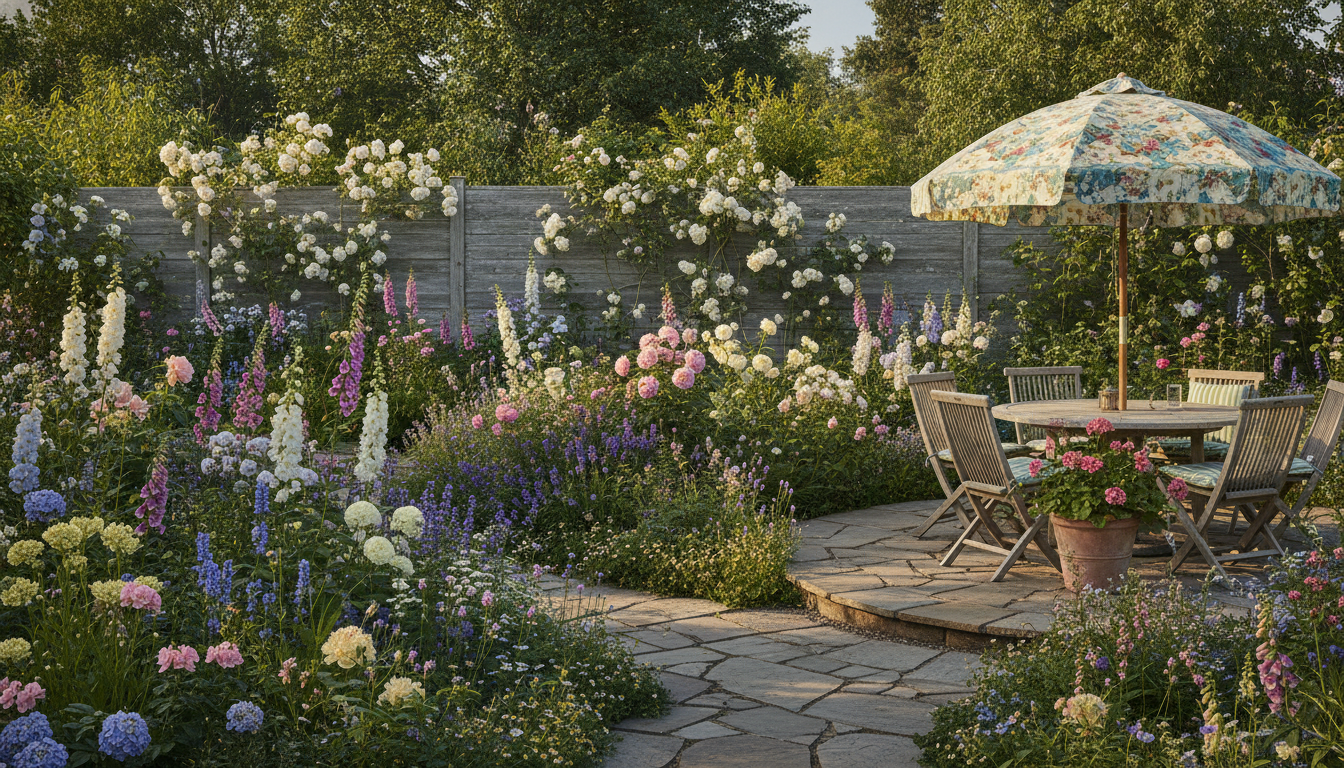
The Cottage style is the truest expression of this aesthetic—romantic, overgrown, and gloriously informal. Think climbing roses, delphiniums, foxgloves, and lavender packed tightly together. Cottage gardens often feature picket fences, gravel paths, and abundant seating tucked among the flowers. This style celebrates the beauty of plants in their full, natural form.
English Style
The English garden refines cottage principles into a more structured vision. While still lush and colorful, English gardens typically include defined borders, manicured edges, and thoughtful focal points. Planting ideas emphasize harmonious color progressions and the balance between hardscape and soft plantings. This style works beautifully if you love cottage abundance but prefer a touch more organization.
Tuscan Style
For warmer, drier climates, the Tuscan approach adapts planting ideas to Mediterranean conditions. Lavender, rosemary, olive trees, and drought-tolerant perennials replace moisture-loving English favorites. Travertine and terracotta complement these plantings, creating a sun-soaked, rustic elegance that feels like the Italian countryside.
Desert Style
The Desert style rethinks cottage principles for arid regions. Agaves, sedums, desert roses, and ornamental grasses replace traditional cottage flowers. This planting approach is water-wise, low-maintenance, and equally beautiful—proving that abundance doesn't require constant watering.
Material & Style Pairings
| Style | Materials | Why They Work |
|---|---|---|
| Cottage | Garden Wall Cover, WPC Fence Panel | Soft greenery backdrops and weathered fencing create romantic enclosure for dense planting beds without looking corporate. |
| English | Blue Limestone, WPC Fence Panel | Structured stone pathways define planting zones while durable fencing provides clean borders for formal borders. |
| Tuscan | Patio Stone Vinyl, Patio Umbrella Canvas | Warm stone flooring echoes Mediterranean aesthetics; canvas umbrellas add rustic shade perfect for sitting among fragrant plantings. |
| Desert | Patio Stone Vinyl, Garden Wall Cover | Practical hard surfaces handle foot traffic in sparse plantings; living walls add greenery where traditional gardens would clutter. |
Planning Your Planting Scheme
Successful cottage garden planting ideas start with understanding your site: sunlight, soil type, rainfall, and hardiness zone. These fundamentals determine which plants thrive in your space.
Once you know your conditions, layer by height and bloom time. Place tall plants (delphiniums, hollyhocks) at the back, mid-height shrubs and perennials in the middle, and low edging plants (catmint, lamb's ears) at the front.
Stagger bloom times so something flowers from spring through autumn.
When you're designing the overall floor & wall materials renovation for Garden / Yard, choose surfaces that complement your planting beds rather than compete with them. A patio or pathway grounds the composition and provides breathing room between dense plantings.
Cottage Garden Planting Essentials
- Perennials: Roses, lavender, delphiniums, peonies, coneflowers, black-eyed Susans, and foxgloves provide reliable structure and color year after year.
- Self-seeders: Poppies, nigella, alchemilla, and borage create spontaneous charm by reseeding naturally—embracing the casual aesthetic.
- Shrubs: Lilacs, hydrangeas, and spirea add vertical interest and backbone to your planting design.
- Companion plants: Herbs like thyme, sage, and oregano mingle beautifully with flowers while offering practical culinary benefits.
- Annuals: Dahlias, zinnias, and cosmos fill gaps and extend bloom time through summer and fall.

Once your planting beds are established, consider add / replace furniture for Garden / Yard to create gathering spaces. A bench nestled among flowering shrubs, a small table for tea, or a swing encourages lingering and enjoyment—the true heart of cottage living.
Visualizing Your Design Before You Plant
Before purchasing plants or materials, imagine your complete garden environment. AI room redesign for Garden / Yard tools let you experiment with different style approaches, test material combinations, and preview how plantings interact with hardscape elements.
If you're uncertain about plant placement, try virtual decluttering for Garden / Yard to simplify existing elements and identify the best locations for new plantings. Or use object remover for Garden / Yard to clear away obstacles blocking your vision for planting beds.
Learn more about specific styles in our guide to Transform Your Yard With Cottage Garden Design Ideas or explore seasonal planning in Cottage Garden Landscaping Ideas for Every Season.
FAQ
What's the difference between cottage and English garden planting styles?
Cottage gardens prioritize abundant, informal planting with self-seeding plants and overlapping colors. English gardens refine this abundance into more structured borders and harmonious color schemes while maintaining lushness.
Can I use cottage garden planting ideas in a small yard?
Absolutely. Scale your plantings to your space—use compact varieties, grow fewer species in greater density, and choose dwarf shrubs. The principle of layered, colorful abundance works beautifully at any size.
Which plants work best for year-round cottage garden interest?
Combine spring bulbs (tulips, alliums), summer bloomers (roses, lavender, delphiniums), autumn performers (asters, sedum, ornamental grasses), and winter evergreens or structures for constant visual appeal.
Ready to transform your garden vision into reality? Try it free on vividoo.app—upload a photo of your yard, select a cottage garden style, and explore how different planting ideas and materials come together. See your dream garden before you dig a single hole.