Brick walls have become a signature feature in contemporary living room design, offering texture, warmth, and architectural interest. Whether your space features original brick or you're considering adding one, knowing how to style it makes all the difference. The right decor approach transforms a brick accent wall from a bare architectural element into the focal point of your room.
Your living room deserves a cohesive design that celebrates its brick features while maintaining balance and harmony. This guide explores practical decor strategies and design styles that work beautifully with exposed brick.
Why Brick Walls Work in Living Rooms
Brick brings natural texture and durability to any space. Its earthy tones create a grounded, welcoming atmosphere that complements both traditional and contemporary furniture. Brick also provides excellent acoustic properties, helping to soften sound and create a more intimate environment.
When paired with thoughtful styling and the right color palette, brick walls become a backdrop that enhances rather than dominates. The key is selecting decor and materials that respect the wall's inherent character while supporting your chosen design direction.
Design Styles That Complement Brick Walls
Different design movements work distinctly well with exposed brick. Understanding which style aligns with your vision helps guide furniture selection, lighting choices, and accessory placement.
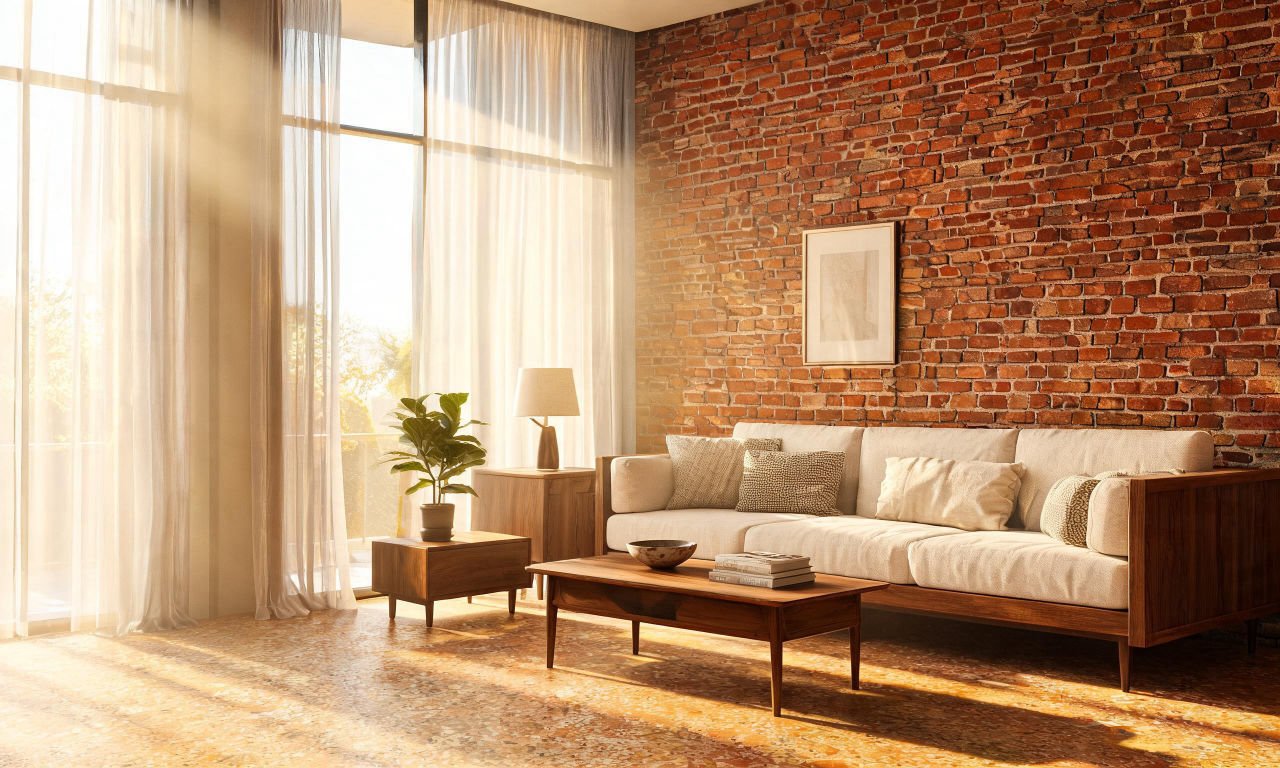
Bauhaus, with its emphasis on clean lines and functional beauty, creates striking contrast against textured brick. The geometric simplicity of Bauhaus design lets the wall's natural character shine. Golden Hour style brings warmth that echoes brick's natural palette, using rich golds and amber tones to enhance the wall's warmth. Steampunk styling celebrates brick's industrial heritage, pairing it with metal accents and vintage furnishings for an edgy, sophisticated look. Maximalism embraces brick as one element among many, layering textures, patterns, and bold colors for a confident, curated appearance.
Material & Style Pairings
| Style | Recommended Wall Material | Why It Works |
|---|---|---|
| Bauhaus | Clinker Brick | Clinker Brick's uniform, clean appearance suits Bauhaus minimalism while maintaining textural interest. |
| Golden Hour | Mud Brick | Mud Brick's warm, earthy tones amplify Golden Hour's amber and ochre palette naturally. |
| Steampunk | Clinker Brick | Clinker Brick's industrial aesthetic complements Steampunk's vintage-metal design language. |
| Maximalism | Mud Brick | Mud Brick's varied texture provides rich visual depth for Maximalism's layered approach. |
Flooring That Anchors Brick Walls
Your floor material should balance the brick's visual weight. Floor and wall material choices work together to establish the room's foundation. Warm materials like Honey Oak flooring harmonize beautifully with both Mud Brick and Clinker Brick, creating continuity between wall and floor. For contemporary schemes, Amber Terrazzo offers a sophisticated concrete alternative that complements industrial brick styling.



Styling Strategies for Brick Accent Walls
Successful brick wall decor balances several elements. Keep furniture placement intentional—position seating to face the wall and allow it to anchor the composition. Artwork, mirrors, and wall-mounted shelving should respect the brick's texture rather than compete with it.
Lighting transforms brick throughout the day. Warm lighting (2700K) emphasizes the wall's earthiness, while task lighting creates layered depth. Consider wall sconces flanking a focal point or pendant lights positioned to cast subtle shadows across the brick's surface. If you're redesigning your entire space, AI room redesign tools can visualize how different styles interact with your existing brick.
Color choices matter tremendously. Neutral furnishings let brick command attention, while jewel-tone accents add sophistication. Textiles—throws, rugs, cushions—introduce pattern and warmth without overwhelming the wall's presence.
Creating Balance in the Room
A brick wall's strong visual presence requires careful distribution of other elements. Avoid placing heavy, dark furniture directly against it. Instead, let light wooden pieces or clean-lined modern seating complement the wall's texture. Plants add organic softness that plays beautifully against industrial or rustic brick.
If your space feels cluttered, virtual decluttering tools help you evaluate what stays and what goes. For furniture adjustments, adding or replacing furniture pieces lets you test different arrangements before committing.
FAQ
How do I make a brick wall feel modern rather than rustic?
Pair brick with contemporary furniture, metallic accents, and minimalist decor. Bauhaus and Steampunk styles both modernize brick effectively through clean lines and curated accessories. Lighting also plays a crucial role—sleek pendant lights and hidden fixtures feel contemporary.
What's the best way to cover or modify an unappealing brick wall?
Marble inlays or other overlay materials can update brick aesthetically. Alternatively, strategic artwork, shelving, and tapestries work around the wall's character. Object removal tools help visualize what stays visible.
Can brick walls work in small living rooms?
Yes. Brick's texture actually makes small spaces feel cozier rather than cramped. Use lighter furniture and avoid dark colors to prevent the room from feeling too heavy. Minimalist small room design ideas pair especially well with brick's inherent presence.
Visualize Your Brick Wall Design
Seeing how different styles and materials work with your specific brick wall removes guesswork from decorating. Try it free on vividoo.app by uploading a photo of your living room, selecting your preferred style from Bauhaus to Maximalism, and optionally choosing wall and floor materials like Mud Brick or Clinker Brick to preview the complete transformation.
Related reading: explore living room porcelain tile design ideas and minimalist hall design ideas for living rooms for complementary inspiration.