Dining room wall tiles design images reveal an underutilized opportunity to transform one of your home's most social spaces. The right wall tile selection creates visual drama, defines your design personality, and sets the tone for every meal shared around your table.
Whether you're drawn to bold artistic statements or understated elegance, tiles offer durability, easy maintenance, and endless aesthetic possibilities. This guide explores how different design styles leverage wall tiles to create memorable dining environments.
Wall Tiles as Design Anchors
Tiles have served as architectural elements for centuries, prized for their beauty and practicality. In modern dining rooms, they function as focal points that anchor your overall design narrative.
Wall tiles differ from flooring tiles in their lighter weight, varied finishes, and decorative potential. They can cover an entire wall, create an accent zone behind a buffet, or frame a fireplace—each placement strategy communicates something distinct about your design intent.
- Accent walls draw attention to architectural features
- Full-wall installations establish immersive design environments
- Patterned layouts create rhythm and movement
- Metallic finishes add luxury and reflective light
Maximalism: Celebrating Pattern and Abundance
Maximalism dining room designs embrace bold color, pattern mixing, and curated eclecticism. This style views wall tiles not as subtle background elements but as confident design statements worthy of starring roles.
In a Maximalist dining room, maximalist aesthetics encourage layering decorative wall tiles with patterned textiles, colorful artwork, and statement furniture. Wall material choices become opportunities for self-expression rather than cautious neutral selections.
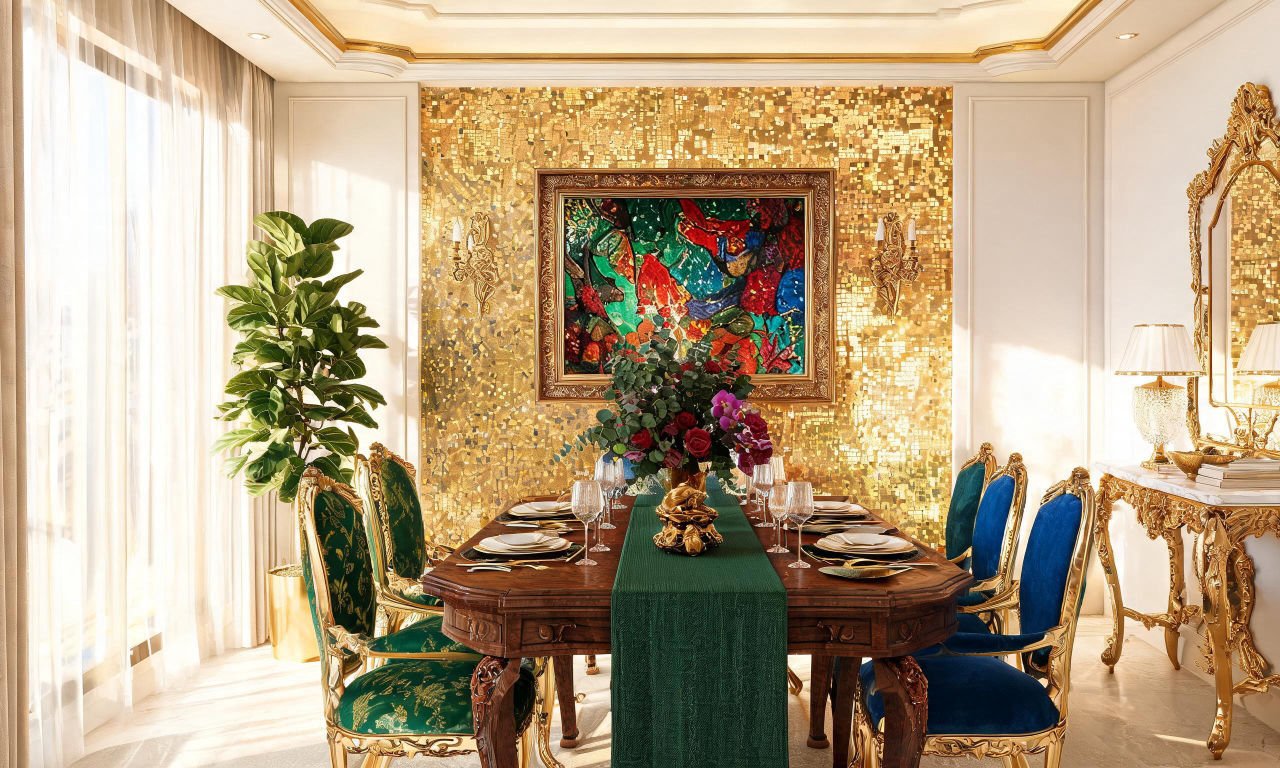
Gold Leaf Mosaic tiles exemplify Maximalist vision—luminous, intricate, and impossible to ignore. These wall mosaics catch candlelight during dinner parties and create conversation-starting focal points that celebrate abundance and artistic confidence.
Bauhaus: Form Meets Function in Dining Design
Bauhaus dining room design strips away ornament to reveal essential beauty. This movement prioritizes clean lines, honest materials, and the principle that form follows function—a philosophy that transforms how we consider wall tile selection.
Bauhaus interiors favor geometric simplicity and high-quality materials selected for their inherent qualities. A single-color ceramic tile in a subtle matte finish allows wall texture to speak without competing with other design elements. The craftsmanship of the tile itself becomes the ornament.
This restraint creates dining spaces that feel timeless, organized, and sophisticated—environments where conversation and food take center stage while design remains elegantly invisible.
Brutalism: Raw Beauty and Architectural Drama
Brutalism dining room aesthetics celebrate raw materials, monumental forms, and unpolished surfaces. Brutalist architecture rejects decoration in favor of bold geometric expression and honest material representation.
In dining contexts, Brutalist wall tiles often feature textured surfaces, earthy tones, and substantial visual weight. Urban Steel wall finishes paired with concrete-textured tiles create industrial dining environments that feel both welcoming and architecturally intentional.
These spaces appeal to design-forward homeowners who view the dining room as a gallery for bold artistic choices rather than a traditional formality.
Neoclassical: Timeless Elegance and Refined Detail
Neoclassical dining room design returns to classical proportions, symmetry, and sophisticated restraint. This style views wall tiles through a lens of refinement—selecting materials that echo historical precedent while maintaining contemporary practicality.
Spanish Tile represents the Neoclassical approach beautifully, with traditional patterns, earthy hues, and handcrafted appeal. These tiles echo Mediterranean Revival traditions while functioning as modern wall treatments.
Neoclassical dining rooms feel enduringly elegant—spaces where timeless design choices remain relevant across years and changing design trends.
Material & Style Pairings
| Design Style | Recommended Materials | Why They Work |
|---|---|---|
| Maximalism | Gold Leaf Mosaic | Creates luxurious visual impact; celebrates ornament and pattern that define the style |
| Bauhaus | Ceramic Tile | Showcases material honesty and clean geometric simplicity central to Bauhaus philosophy |
| Brutalism | Urban Steel, Terrazzo Style Resin | Raw, industrial textures align with brutalist celebration of honest materials and bold forms |
| Neoclassical | Spanish Tile | Traditional patterns and craftsmanship echo classical design precedent while maintaining refinement |


Visualizing Your Dining Room Transformation
AI room redesign tools for dining rooms allow you to preview wall tile selections before committing to renovation projects. Upload a photo of your current space, select a style—Maximalism, Bauhaus, Brutalism, or Neoclassical—and see how different materials transform your environment.
Beyond tile selection, furniture styling and spatial organization influence how wall tiles integrate into your complete design. A comprehensive renovation approach considers lighting, existing architectural features, and your personal lifestyle needs.
For dining rooms requiring fresh starts, empty room generation reveals possibilities for completely reimagined spaces, while object removal tools allow you to eliminate visual distractions before design planning begins.
Related Design Inspiration
Explore complementary design approaches: Dining Room Tiles Design Images: Transform Your Space provides broader material perspectives, while Feng Shui Dining Room Decor integrates wellness principles with aesthetic choices. Consider mirror placement strategies for expanding perception of wall-tiled spaces.
FAQ
What wall tile material works best for dining rooms?
The ideal material depends on your design style and practical needs. Ceramic Tile suits Bauhaus aesthetics for durability and clean lines, while Gold Leaf Mosaic elevates Maximalist spaces with luxury. Material renovation planning should balance visual impact with maintenance requirements.
How much of my dining room wall should I tile?
Accent walls (behind buffets, sideboards, or as a feature) work well for bold statement tiles. Full-wall installations create immersive environments but require thoughtful color and pattern selection. Consider your room's natural light and existing architectural features.
Can I see dining room wall tile designs before purchasing?
Yes—digital design tools let you visualize tiles in your actual space. Upload your room photo, select your preferred style, and explore how different materials appear under your specific lighting conditions before making purchases.
Your dining room wall tiles design choices shape how your space functions and feels. Whether you embrace Maximalist exuberance, Bauhaus restraint, Brutalist drama, or Neoclassical refinement, the right tiles create dining environments where family and friends gather for meaningful moments. Try it free on vividoo.app to preview your dining room transformation today.