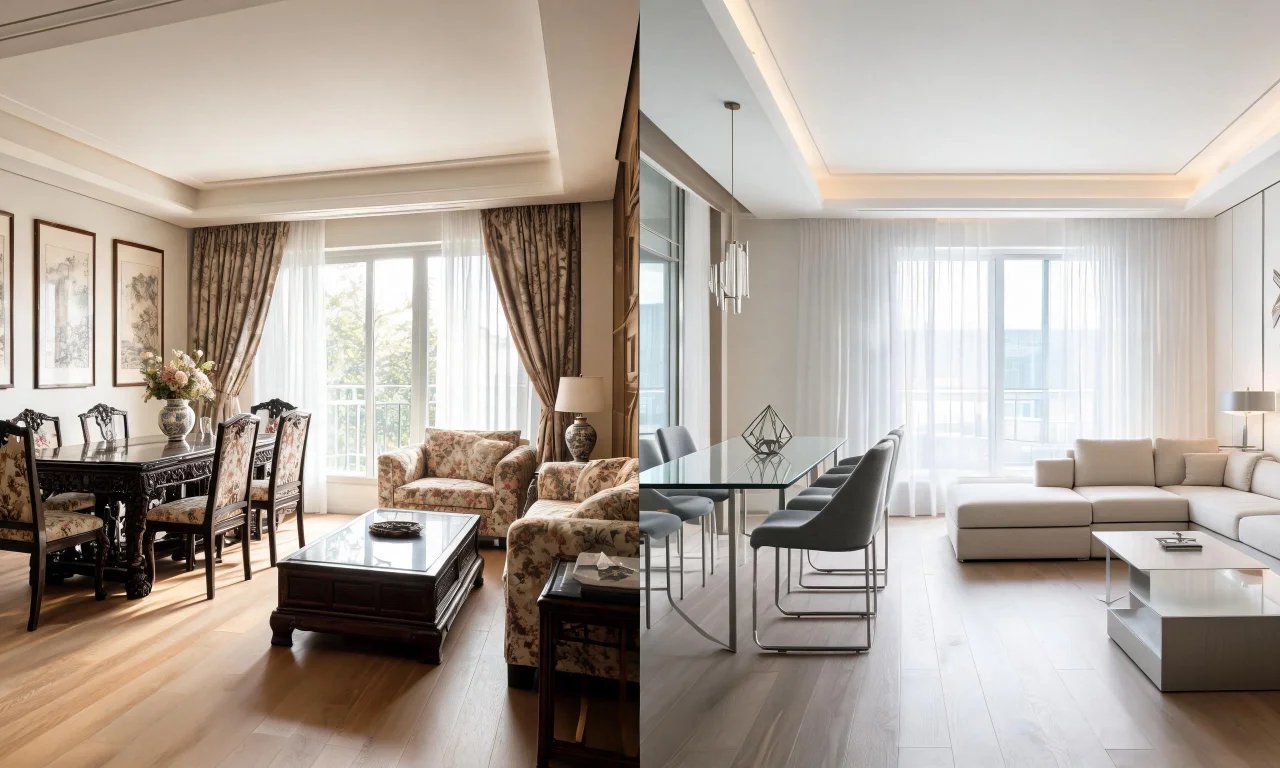
An empty listing sits on the market for another week. The agent is weighing two options: call a professional stager, or open an app.
That choice is becoming one of the defining decisions in real estate marketing for 2026. ai design tools now let anyone furnish, declutter or renovate a photo in minutes, while traditional staging still fills physical rooms with real furniture.
This article compares both approaches honestly, so you can pick the right one for your next listing.
Key takeaways
- Traditional staging involves real furniture, delivery crews and rental fees that add up over weeks on market.
- ai design tools like vividoo can furnish, declutter or restyle a photo in minutes on a free plan.
- Realism and buyer walkthrough experience still favor physical staging for high-end, occupied listings.
- Flippers and agents on tight budgets often get the most value from combining both approaches.
- The right choice depends on price point, timeline and whether buyers will walk through in person before offering.
How traditional home staging works and what it costs
Traditional staging is a physical service built around furniture, labor and logistics.
The traditional staging workflow
A stager visits the property, assesses the layout, and proposes a furniture plan.
Rental furniture, artwork and accessories are then delivered, arranged and photographed by a professional.
When the home sells or the listing period ends, everything is picked up and returned to storage.
- Initial consultation and design plan
- Furniture and decor rental for the listing period
- Delivery, setup and styling by a crew
- Professional photography once staged
- Removal and pickup after the sale or contract ends
What it typically costs
Costs vary widely by market, home size and how long a property stays listed.
Rental fees, labor and storage all add up, and they keep accruing the longer a home sits unsold.
It's worth requesting current quotes from local stagers rather than relying on national averages, since pricing shifts by region and season.
Pro tip
Ask stagers whether their quote includes pickup fees if the home sells early. Some contracts charge extra for early removal.
How AI design tools stage empty rooms virtually
AI design tools take a photo of an empty or furnished room and generate a styled version without touching the physical space.
Instead of renting sofas and coffee tables, the software generates realistic furnishings directly on the image.
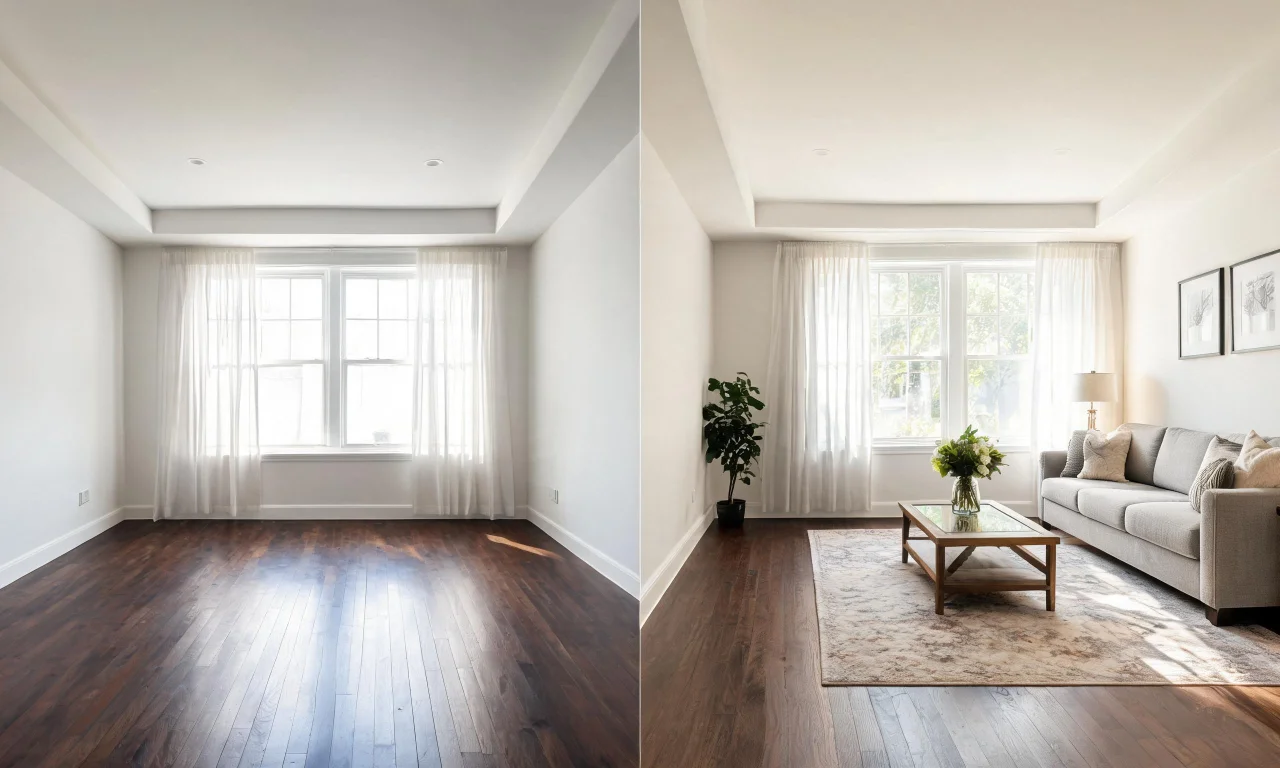
Furnishing empty rooms with vividoo's Empty Room Generator
The AI Empty Room Generator clears an indoor, outdoor or exterior space, and this same workflow is how vividoo presents virtual staging publicly.
An agent uploads a photo of a vacant room, and the tool renders a furnished version for marketing use.
It's available on vividoo's free plan, which makes it accessible for a first listing photo without any commitment.
The limitation is that it works from the photo itself, so it can't replace an in-person walkthrough for buyers who want to see real scale and texture.
Restyling furnished rooms with AI Room Redesign
The AI Room Redesign tool restyles a room that's already furnished, swapping colors, finishes and decor styles.
This suits sellers who have furniture in place but want to show buyers a more modern or neutral look.
It's also free to use, which makes it a low-risk way to test different styles before committing to any physical changes.
Exterior and finish previews
The AI Exterior Redesign tool restyles facades and exterior spaces on the free plan, while AI Room Renovation previews indoor materials and finishes.
Virtual Decluttering removes light indoor clutter, which is useful for occupied homes that need a quick visual clean-up before photos.
None of these free tools handle object removal, adding or replacing specific furniture items, or exterior landscaping changes.
Those live on paid plans, alongside outdoor and landscape redesign features for exteriors.
Speed, cost and realism compared side by side
The two approaches differ most sharply on turnaround time and upfront cost.
| Factor | Traditional staging | AI design tools |
|---|---|---|
| Turnaround | Days to schedule delivery and setup | Minutes per image |
| Upfront cost | Rental, labor and delivery fees | Free plan for core tools; paid plans for advanced features |
| Buyer experience | Real furniture during in-person tours | Photo-based, marketing only |
| Flexibility | Fixed once installed | Try multiple styles instantly |
| Best for | Occupied or high-end listings | Vacant listings, quick marketing turnaround |
Realism has improved significantly for AI-generated interiors, but it's still a rendered image rather than a physical room.
Traditional staging wins on tactile realism because buyers can touch, sit and walk through what they see.
Pro tip
Disclose that listing photos are virtually staged. Many MLS systems and buyer expectations require this transparency.
Best use cases for agents, sellers and flippers
Different sellers benefit from different combinations of these tools.
Real estate agents
Agents juggling multiple listings often use ai design tools to get marketing photos online fast, especially for vacant homes.
A quick render from the AI Design Tools suite can go live before a physical stager is even scheduled.
Sellers on a budget
Homeowners who can't justify staging costs for a modest listing often rely entirely on virtual tools for online photos.
This works best when the home will already look presentable in person, since buyers still tour it unfurnished.
Flippers and investors
Flippers frequently use renovation preview tools to test finish options before buying materials.
AI Room Renovation and AI Exterior Redesign let them visualize outcomes before spending on labor or supplies.
- Agents: fast marketing photos for vacant or in-between listings
- Sellers: low-cost styling for online listing photos
- Flippers: material and finish previews before renovation spend
- Designers: quick concept sharing with clients before physical work begins
Where traditional staging still wins
Physical staging remains the stronger choice in several specific situations.
High-end listings where buyers expect a full sensory walkthrough still benefit from real furniture, lighting and scent.
Occupied homes with awkward layouts sometimes need a stager's hands-on furniture arrangement rather than a photo edit.
When buyers tour before making an offer
If most buyers see the home in person before offering, virtual staging alone won't shape that experience.
Traditional staging directly influences how a room feels during a walkthrough, not just how it photographs.
When furniture scale matters most
Physical staging lets buyers judge whether their own furniture will actually fit a room.
AI-generated images are useful for marketing, but they don't replace that hands-on spatial judgment.

Choosing the right approach for a listing
The right choice usually comes down to timeline, budget and whether buyers will tour in person before deciding.
- Vacant listing, tight timeline: start with free virtual staging for marketing photos.
- High-end or occupied home: budget for traditional staging alongside any virtual previews.
- Renovation or flip project: use material preview tools before committing to physical changes.
- Limited marketing budget: lean on free ai design tools first, add physical staging only if needed.
Many agents now blend both, using virtual tools for early online marketing and physical staging closer to open houses.
Browsing a Community Gallery of virtually staged rooms can help set expectations before choosing a plan.
For teams comparing feature access across free and paid tiers, the Pricing page lays out what's included at each level.
Whichever path you choose, testing a room in the Design Studio first costs nothing and takes only minutes.
For more comparisons and listing marketing guidance, the vividoo Blog covers both staging strategy and renovation previews.