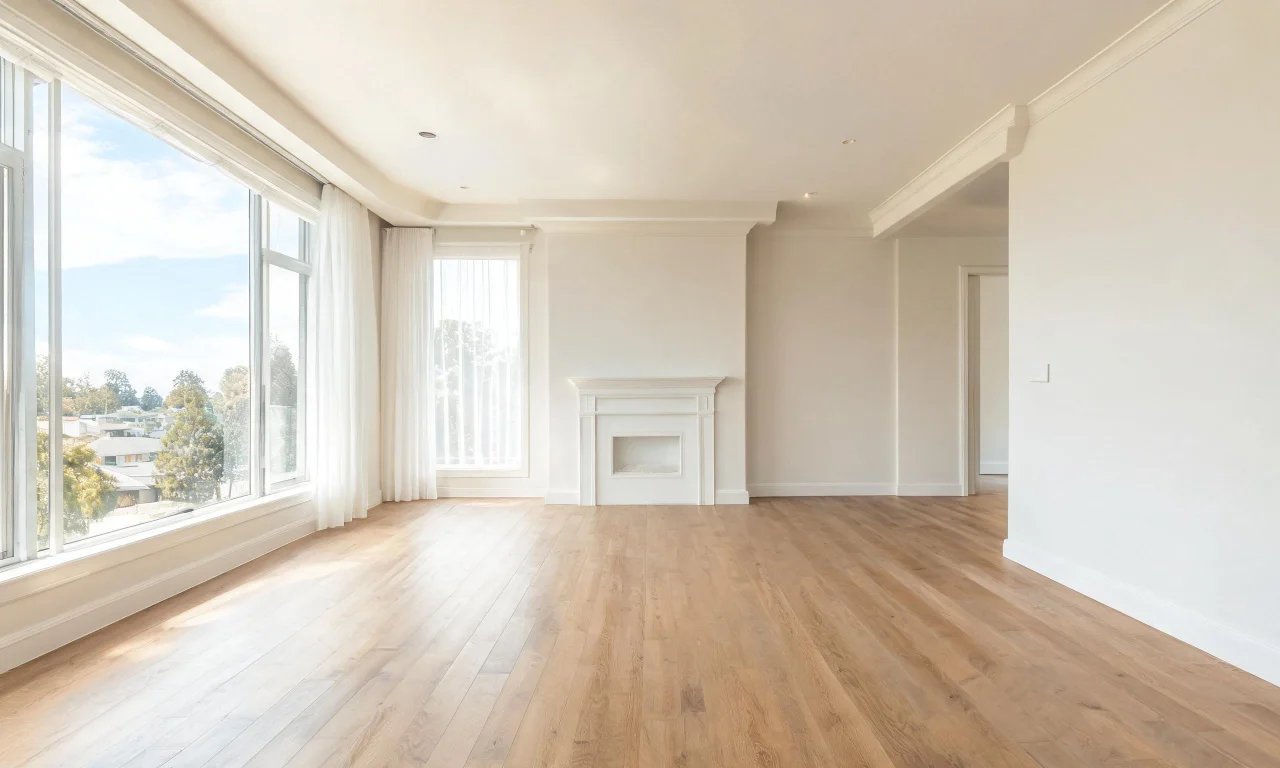
An empty room photographs cold. Buyers scroll past it in seconds because they can't picture a sofa, a bed, or family dinners happening inside four bare walls.
Traditional staging fixes that problem but it's slow and expensive. An ai empty room generator promises the same buyer psychology for a fraction of the cost.
This article breaks down the real numbers: what physical staging costs, what paid virtual staging services charge, and what a free AI workflow can save on a typical listing.
Key takeaways
- Physical home staging in the US commonly runs $500 or more per room in setup and rental fees, according to national staging association benchmarks.
- Paid virtual staging services charge per image, often several dollars per photo depending on credit tier.
- vividoo's Empty Room Generator furnishes an empty or cluttered room digitally on the free plan, with no per-image staging fee.
- A worked example later in this article shows an 89% cost saving versus physical staging on a three-room listing.
- Agents, sellers and flippers each get a slightly different return from cutting staging costs.
Why Empty Rooms Struggle to Sell
Vacant listings ask buyers to do the hardest part of house-hunting themselves: imagining furniture, scale, and lifestyle in a blank space.
Most people can't do that reliably from a photo. Rooms without furniture also tend to photograph as smaller than they actually are, since there's nothing to anchor scale.
National staging association surveys have long reported that staged homes tend to spend less time on market and can achieve modest price premiums compared with vacant listings, though results vary by market and property type.
- Empty rooms often look smaller in wide-angle listing photos.
- Buyers struggle to judge whether furniture will actually fit.
- Vacant homes can read as neglected or hard to sell, even when the property is fine.
- Listings with no lifestyle context get fewer saved searches and shares.
Pro tip
Even one staged hero image, like the living room or main bedroom, can lift buyer engagement more than staging every room.
How the AI Empty Room Generator Workflow Works
The AI Empty Room Generator handles two jobs in one workflow: clearing a space and then furnishing it.
First, it can strip an indoor, outdoor or exterior space back to empty, removing existing furniture or fixtures from the photo.
Second, that cleared space becomes the canvas for AI virtual staging, where the tool furnishes the empty room digitally so it reads as move-in ready.
- Upload a photo of the room, furnished or empty.
- Run the Empty Room Generator to clear it back to a blank space if needed.
- Apply virtual staging so the AI populates the empty room with furniture and decor.
- Download the result for listing photos, brochures or social posts.
This sits alongside other free-plan tools, including AI Room Redesign for restyling an already-furnished room without clearing it first.
Agents comparing every available option can browse the full set of AI design tools to see which workflow fits a given listing.
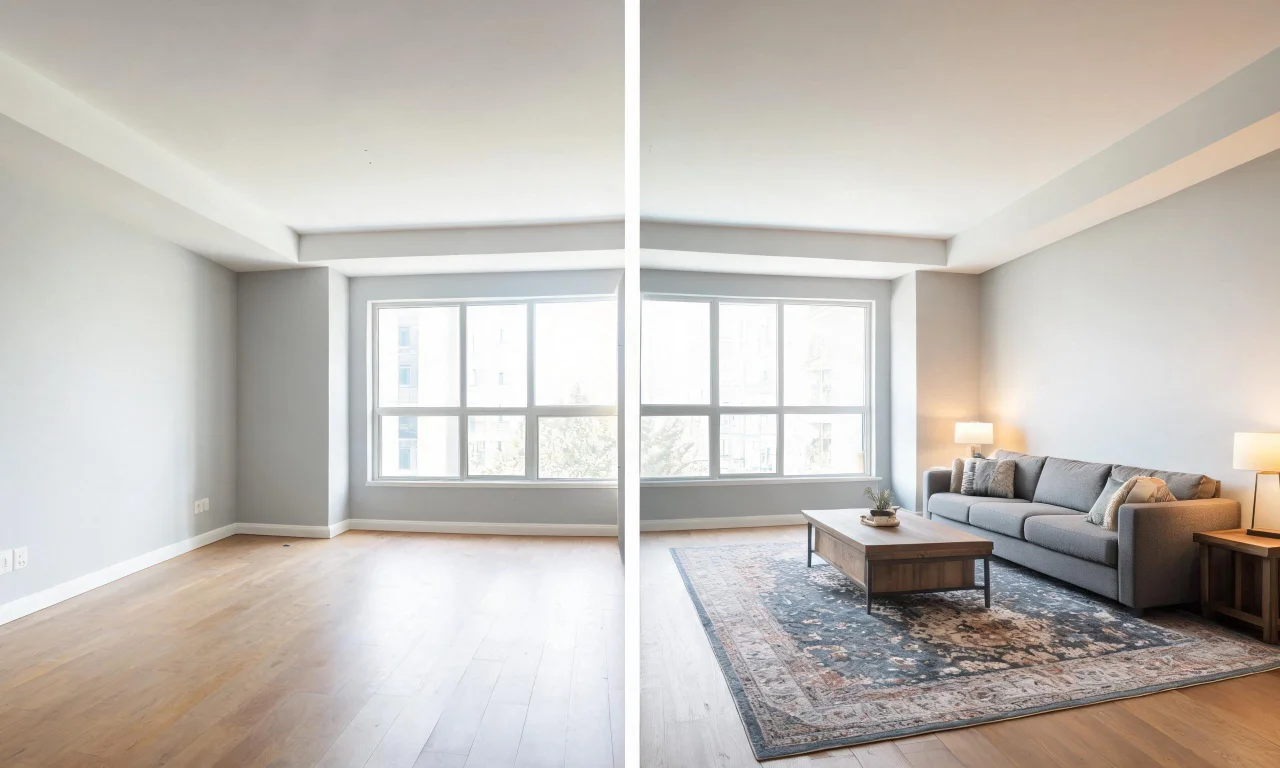
Traditional Staging Costs vs AI Staging Costs
Physical home staging in the US typically involves an upfront consultation fee plus a monthly rental charge per room, according to national staging association benchmarks for 2026.
Paid virtual staging services charge per image instead, which changes the maths considerably once you're staging a full listing rather than one hero shot.
PhotoUp, a photo editing and virtual staging service, lists AI Virtual Staging on-demand pricing at $1. 50 per credit, with additional credit packs from $1.
10 or more per credit, at the time of writing. Each staged image typically consumes several credits, so readers should check PhotoUp's current pricing page before budgeting.
vividoo's Empty Room Generator, by contrast, sits on the free plan, so clearing and virtually staging a room carries no per-image staging charge.
| Staging Approach | Typical Cost (US, 2026) | What You Get |
|---|---|---|
| Physical home staging, 3 rooms, 1 month | $500 consultation + $1,500 furniture rental (3 x $500/room/month) = $2,000, plus $250 photography = $2,250 | Real furniture delivered, styled and photographed on site |
| Professional virtual staging service (e.g. PhotoUp on-demand credits) | $250 photography + roughly $13.50 staging (3 rooms x 3 credits x $1.50/credit, on-demand pricing, at the time of writing) = about $263.50 | Digitally furnished photos, edited on a per-image, per-credit basis |
| vividoo AI Empty Room Generator (free plan) | $250 photography only; staging itself is free on the free plan | AI-furnished room previews you can regenerate before choosing a final look |
Worked Example: Cost Comparison Table
Take a vacant three-bedroom listing that needs staging for photos before it goes live.
Option A, physical staging, costs $500 for consultation plus $1,500 for three rooms of furniture rental for one month, plus $250 for photography.
That subtotal is $2,000 in staging fees, and the total with photography comes to $2,250.
Option B, a paid virtual staging service such as PhotoUp, still needs the $250 photography step, since virtual staging works from real photos of the empty rooms.
Staging three images at roughly 3 credits each, at $1.50 per credit on-demand pricing, adds about $13.50, bringing the total to roughly $263.50.
Option C uses vividoo's free-plan Empty Room Generator for the staging step, so only the $250 photography cost applies, with staging itself free.
- Physical staging total: $2,250
- Paid virtual staging total: about $263.50
- vividoo free-plan staging total: $250
- Saving versus physical staging: $2,250 - $250 = $2,000
- Return on the switch: $2,000 / $2,250 = about 89%
Even against the already-cheap paid virtual staging option, the free-plan route saves the remaining staging fee entirely, since photography is the only shared cost.
Pro tip
Keep the photography line item separate in any staging budget. It's the one cost that stays fixed no matter which staging method you choose.
Who Benefits Most: Agents, Sellers, Flippers
Real Estate Agents
Agents juggling multiple listings benefit from cutting per-listing staging cost without losing the visual pitch that gets a home noticed.
A faster, cheaper staging workflow means more listings can get the full treatment instead of only the flagship properties.
The main limitation is that AI staging still relies on a decent base photo, so lighting and angle still matter.
Individual Sellers
Sellers moving out before listing are often left with genuinely empty rooms and no staging budget at all.
An empty room generator lets them show a furnished-looking home without renting furniture or paying a stylist by the month.
They should still expect to pay for standard listing photography, since AI staging works from a real photo of the space.
Flippers and Investors
Flippers juggling several properties at once feel staging costs multiply fastest, since every unit needs its own furniture rental under the traditional model.
Digital staging removes that multiplication problem, since the same free-plan workflow scales across as many rooms as needed.
The trade-off is that AI staging shows potential, not the finished renovation, so flippers doing structural work may still want AI Room Redesign or a renovation preview tool alongside it.

Getting Started on the Free Plan
Getting a first staged photo out of vividoo doesn't require a paid plan or a credit card commitment.
The free plan covers the Empty Room Generator for clearing and virtual staging, alongside AI Room Redesign, Virtual Decluttering, AI Exterior Redesign and AI Room Renovation.
- Upload a clear, well-lit photo of the empty or cluttered room.
- Run the Empty Room Generator to clear remaining clutter if the room isn't fully empty.
- Apply virtual staging to furnish the space digitally.
- Compare a few style variations before picking the one that suits the listing.
Anyone wanting to see real staged examples before starting can browse the community gallery for inspiration.
For features that go beyond the free tools, such as adding or replacing furniture and objects, the pricing page lays out what sits on the Starter and Pro plans.
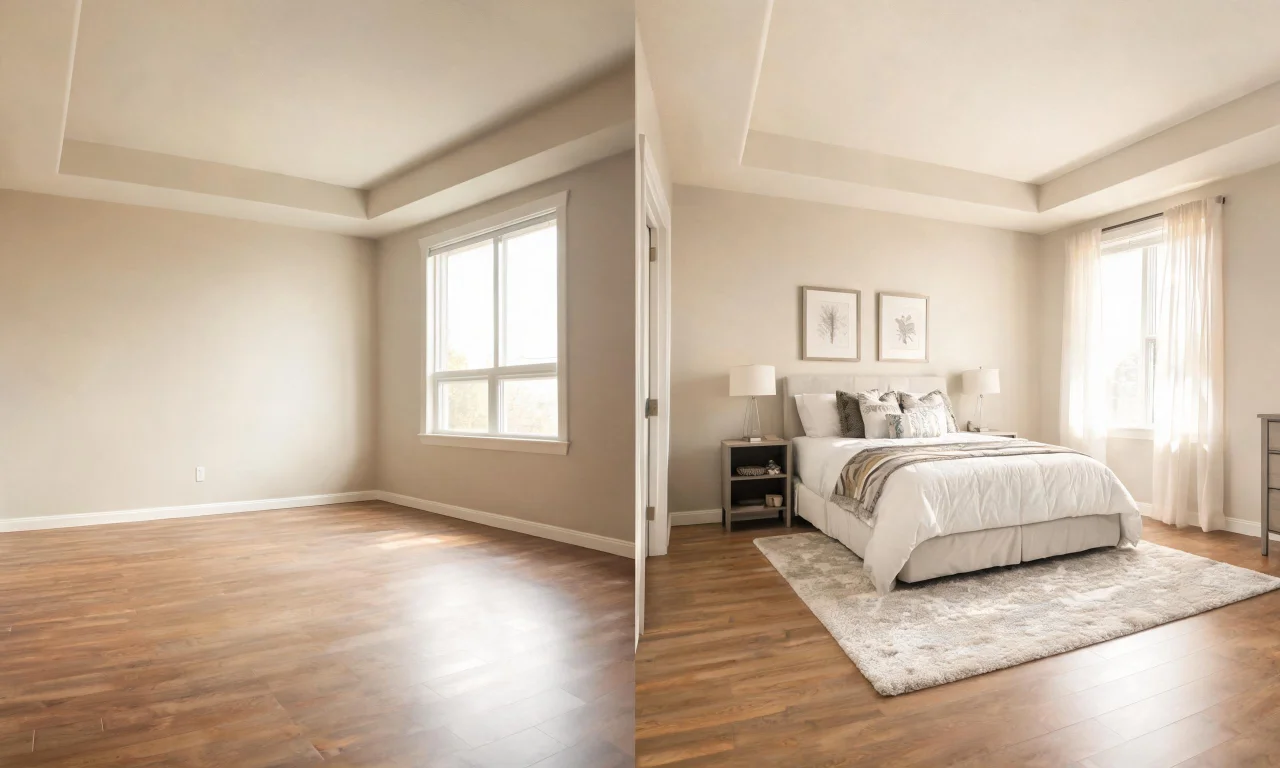
Design-minded sellers who also want material or finish previews can explore the design studio for a broader set of options.
Whichever plan you land on, comparing the real cost of physical staging against a free digital workflow is worth doing before the next listing goes live.